
English 
Landline: +86-536-6066059
Email: qingyuanpackaging@gmail.com
Dawazi Village, High-tech Industrial Zone, Zhucheng City, 262200, Shandong Province, China


Views: Author: Site Editor Publish Time: 2026-02-27 Origin: Site


Frozen products face a unique set of challenges: sub-zero temperatures, moisture migration, ice crystals, and repeated handling through the cold chain. A Frozen Food Packaging Bag is often expected to “resist frost,” but what that really means is the bag must protect the food from moisture and oxygen movement, keep seals intact at low temperatures, and stay flexible instead of cracking. When the right film structure, barrier layer, and sealing design are used, a frozen food packaging bag can be highly frost-resistant and reliable for long storage.
“Frost” usually refers to visible ice crystals that form when moisture condenses and freezes on the inside of the bag or near the product surface. Condensation happens when temperature changes cause water vapor to turn into liquid droplets, which can later freeze. Freezer burn is different: it’s dehydration and oxidation of food caused by moisture loss and oxygen exposure over time. A Frost-resistant Frozen Food Packaging Bag is designed to reduce these issues by controlling moisture exchange and preventing leaks or micro-openings that let vapor move freely.
True frost-resistance is not a single feature—it’s a combination of low water vapor transmission, stable oxygen barrier (when needed), and high seal integrity. If a bag allows moisture vapor to pass easily, frost can build up. If it allows oxygen to enter, quality loss accelerates and freezer odors can penetrate. If seals weaken under freeze–thaw stress, even the best film cannot prevent frost-related problems.
For frozen conditions, PE-based films (such as LDPE or LLDPE) are popular because they stay flexible at low temperatures and resist brittleness. Flexibility matters because frozen products are often dropped, squeezed, stacked, and transported. A flexible inner layer also helps maintain sealing performance and reduces the chance of stress cracks. In many frozen applications, PE layers form the sealing surface and the main “toughness” component that protects against puncture and cracking.
When you need higher protection, barrier layers come into play. PA (Nylon) can add puncture resistance and toughness—useful for sharp products like bones, seafood shells, or frozen vegetables with hard edges. EVOH offers strong oxygen barrier (when protected from moisture by outer layers), which helps preserve flavor and slow oxidation. Metallized films or foil can provide excellent barriers, but the structure must still be engineered for low-temperature handling so it doesn’t become stiff and prone to crease cracking.
Some plastics become more rigid in deep-freeze conditions, increasing the risk of micro-cracks and pinholes, especially at folds and corners. These tiny defects are enough to allow moisture vapor movement, leading to frost and quality loss. A frost-resistant Frozen Food Packaging Bag reduces this risk by choosing films that remain flexible and by avoiding structures that become brittle under cold shock or impact.
Frozen packaging is not always kept at one stable temperature. During loading, transport, retail stocking, or consumer handling, the bag can experience freeze–thaw cycles. Seals are often the first failure point because they’re under constant stress from product weight and internal pressure changes. Strong seal design, correct sealing temperature, and sufficient seal width help the bag remain closed and protective through these cycles.
A frost-resistant bag starts with sealing that can survive low temperatures without peeling or splitting. Wider seals generally provide better safety margins, and careful corner design reduces stress concentration. If the product has sharp edges, reinforced corners and tougher film layers prevent pinholes that later become frost “entry points.” In mass production, consistent sealing parameters are critical—an uneven seal can create weak spots that fail in cold storage even if the film itself is excellent.
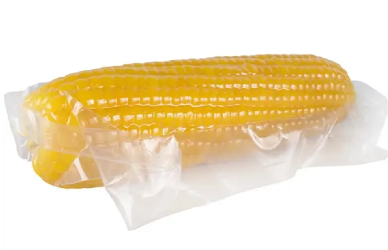
Different formats perform differently in freezing environments. Pillow bags are common for high-speed packing and moderate barrier needs. 3-side seal bags can offer clean edges and stable sealing zones. Stand-up pouches add shelf impact and convenience features but require careful design to handle stacking pressure in frozen display. Vacuum bags reduce oxygen and air space, which can help limit freezer burn and frost, but they demand high puncture resistance and dependable seals.
WVTR (Water Vapor Transmission Rate) describes how easily moisture vapor passes through the film. Lower WVTR helps reduce moisture exchange and can limit internal frost development over long storage. For frozen foods with long shelf life, WVTR becomes especially important. While exact target values depend on structure and product type, the principle is simple: better moisture barrier generally means fewer frost-related appearance problems and better texture retention.
OTR (Oxygen Transmission Rate) measures how much oxygen can pass through the packaging. Even in frozen storage, oxygen matters because oxidation still occurs slowly, affecting taste, color, and fats (especially in meat and seafood). A lower OTR also reduces the chance of “freezer odor” transfer. If your product is sensitive or stored long-term, a barrier structure (often with EVOH, PA, or metallized layers) can be a smart upgrade.
Frozen meats and seafood often require higher puncture resistance and stronger oxygen control to protect fats and flavors. Dumplings and ready meals can involve sauces and oils, so the bag needs a reliable seal layer and stable structure to prevent leaks after freezing and re-handling. Frozen vegetables may create ice crystals and sharp edges, increasing puncture risk. Matching film structure to product characteristics is a key step in building real frost-resistance.
Cold-chain logistics include rough handling, stacking pressure, and temperature fluctuations. A bag that performs well in a lab may fail in transit if it is too thin, poorly sealed, or lacks puncture resistance. For dependable performance, packaging decisions should consider warehouse storage duration, transport vibration, carton packing density, and how the product is displayed in freezers.
Use the guide below to connect storage conditions with practical packaging needs:
Frozen condition | Typical needs | Recommended structure direction |
Short-term freezing (weeks) | Flexibility, good seals, basic moisture control | PE-based mono or simple multilayer films |
Long-term storage (months) | Strong moisture + oxygen control, stable seals | Multilayer with barrier layer (PA/EVOH) |
Deep-freeze + rough handling | High puncture resistance, corner durability, strong seals | Tough multilayer with PA + optimized seal layer |
High-fat products (seafood/meat) | Oxidation protection, odor barrier | Barrier-focused structures (often EVOH/metallized) |
Customization can turn an average Frozen Food Packaging Bag into a frost-resistant solution. Options include adjusting thickness for toughness, adding anti-fog layers for display clarity, using zipper features for consumer convenience, and improving print durability for frozen environments. Most importantly, request sample testing with real products and real freezing cycles—this validates seal strength, puncture resistance, and barrier performance before mass production.
Yes. Freezer burn is linked to moisture loss and oxygen exposure. A higher-barrier frozen food packaging bag with strong seals and reduced headspace can slow dehydration and oxidation, improving long-term quality.
Anti-fog can help when visibility matters—such as retail display pouches that may experience temperature changes. It reduces water droplet formation on the film, keeping the package clearer for shoppers.
The “best” depends on bag format and film structure, but the priority is consistent seal strength and sufficient seal width. Deep-freeze applications often benefit from optimized sealing parameters and tougher seal-layer materials designed for low temperatures.
In many cases, yes—recyclable structures are increasingly available, especially PE-based designs. Performance depends on the required barrier level and handling conditions, so testing is essential to confirm frost-resistance in the chosen recyclable structure.
A Frozen Food Packaging Bag can be truly frost-resistant when it combines low-temperature flexibility, reliable seal strength, and well-matched moisture/oxygen barrier performance for the specific product and storage duration. By choosing the right film structure (such as PE-based layers for cold flexibility and optional barrier layers for long-term protection), reinforcing vulnerable areas like seals, corners, and handle zones, and validating the final design through real freezer storage and freeze–thaw testing, brands can greatly reduce frost buildup, minimize quality defects such as freezer burn or odor transfer, and ensure the package remains durable throughout transportation and retail handling. Ultimately, a well-engineered bag not only protects food safety and freshness, but also improves shelf appearance, reduces customer complaints, and supports stronger consumer confidence in the product.


