
English 
Landline: +86-536-6066059
Email: qingyuanpackaging@gmail.com
Dawazi Village, High-tech Industrial Zone, Zhucheng City, 262200, Shandong Province, China


Views: Author: Site Editor Publish Time: 2026-08-24 Origin: Site


When a heavy waste bag fails, it creates an immediate operational nightmare. Tears, punctures, and sudden leaks rapidly increase cleanup labor time. They also introduce serious safety hazards, severe compliance risks, and immediately compromise your facility’s hygiene standards. Selecting the correct thickness for garbage bags is not about simply buying the thickest available option on the market. Instead, it requires a strategic alignment of material science—specifically analyzing both gauge and resin type—with your exact waste weight and profile requirements. Doing so successfully optimizes your procurement budget and prevents downstream failures. To achieve this, you need precise technical criteria to evaluate and shortlist heavy-duty liners effectively. We will explore how to accurately match polymer properties and thickness measurements to your specific commercial waste streams. Read on to master the precise mechanics of heavy waste containment.
Thickness measurements (Mils vs. Microns) dictate load capacity, but performance heavily relies on the base polymer (High-Density vs. Low-Density).
Heavy, non-sharp waste (like wet grounds or dense sludge) requires high tensile strength, whereas sharp, irregular waste (bones, glass, metal edges) demands high puncture resistance.
Over-speccing bag thickness wastes procurement budget, while under-speccing creates hidden operational costs through double-bagging and spill remediation.
Standard "heavy-duty" commercial bags typically start at 1.2 to 1.5 mil for LLDPE, or 16+ microns for high-density alternatives.
Bag failure compounds costs quickly in commercial and industrial settings. Labor time lost to cleanups drains productivity from essential tasks. Floor spills create acute safety hazards for frontline staff. They increase the risk of slips and falls. To mitigate these risks, janitorial teams often resort to double-bagging. This rogue practice instantly doubles material usage. It creates massive operational inefficiencies and inflates consumable budgets. Sourcing the right plastic bin liners prevents these cascading failures entirely.
You must clearly define what constitutes "heavy waste" in your facility. We categorize heavy waste into two primary threat profiles. First, we have dense, wet waste. This category includes heavy liquids, saturated food waste, and dense sludge. Second, we face sharp, irregular waste. This profile includes metal shavings, broken glass, or heavy jagged plastics. Each profile attacks the plastic film differently. You must address these specific profiles directly during the procurement process.
A successful procurement choice balances baseline load capacity with minimal plastic waste. It also optimizes the unit cost. You do not win by simply ordering the heaviest film available. You win by matching the film structure to the threat profile. This targeted approach eliminates rogue double-bagging while preserving budget integrity.
Table 1: Commercial Heavy Waste Threat Profiles
Threat Profile Category | Common Examples | Primary Risk to Film | Required Mitigation |
|---|---|---|---|
Dense / Wet Waste | Liquids, wet coffee grounds, cafeteria sludge | Bottom blowout from sheer downward weight | High tensile strength and strong bottom seals |
Sharp / Irregular Waste | Broken glass, bones, metal shavings, hardware | Sidewall punctures and continuous tearing | High stretchability and puncture resistance |
Understanding thickness metrics is crucial for accurate procurement. The industry relies on two distinct measurement scales. Buyers often mix them up. This confusion leads to purchasing errors and operational failures. We must demystify these metrics clearly.
Mils (Thousandths of an inch): This is the standard measurement for Low-Density polyethylene (LLDPE). One mil equals exactly 0.001 inches. A 0.7 mil bag handles standard office waste. A 1.5 mil bag enters heavy-duty territory. A 3.0+ mil bag serves contractor-grade needs.
Microns (Thousandths of a millimeter): This is the standard measurement for High-Density polyethylene (HDPE). One micron equals 0.001 millimeters. A 6-micron bag suits light office paper. A 16-micron bag handles standard wet commercial waste. A 22+ micron bag manages exceptionally heavy loads.
You must apply a strict evaluation lens when reviewing specifications. Advise buyers never to compare mils to microns directly. You cannot compare a 16-micron bag to a 1.5-mil bag without understanding the conversion and material differences. Furthermore, warn your teams against manufacturers who obscure their gauge measurements. Reject brands using vague marketing terms like "extra strong" or "super tough." Professional waste management requires exact numbers.
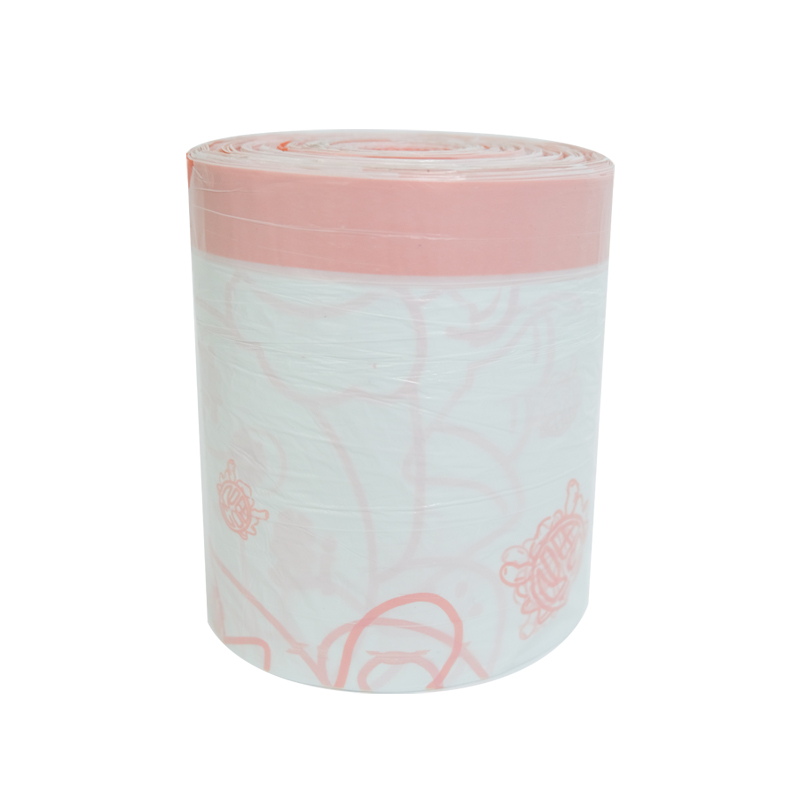
Film thickness acts completely differently depending on the plastic resin used. You cannot look at gauge numbers in isolation. You must understand the underlying material science. The two primary solution categories handle stress in fundamentally distinct ways.
High-Density Polyethylene offers unique performance traits. These polymers pack tightly together at a molecular level. This tight structure creates exceptional tensile strength. It also provides an excellent moisture barrier. However, this same rigid structure results in poor puncture resistance. We highly recommend HDPE waste bags for exceptionally heavy, wet, but smooth waste. They excel at holding dense paper stacks or heavy cafeteria food waste. Watch out for the "zippering" risk. If a sharp object punctures an HDPE bag, the entire side will often split open immediately.
Linear Low-Density Polyethylene (LLDPE) provides an alternative solution. These polymer chains feature extensive branching. This branching allows the plastic to stretch significantly before breaking. It offers superior puncture resistance. LLDPE is undeniably the best choice for jagged, sharp, and irregularly shaped heavy waste. Use them for construction debris. Use them for commercial kitchen waste containing bones or shells. They will stretch around sharp edges rather than tearing open.
Polymer Performance Comparison Chart
Resin Type | Primary Strength | Primary Weakness | Ideal Waste Application |
|---|---|---|---|
HDPE (High-Density) | Extreme tensile load capacity, moisture lock | Prone to zippering upon puncture | Heavy wet sludge, smooth dense debris |
LLDPE (Linear Low-Density) | Excellent stretch and puncture resistance | Lower baseline load capacity per thickness | Jagged objects, bones, construction waste |
We use a specialized features-to-outcomes framework to streamline procurement. This framework maps specific thickness gauges directly to reliable use-case outcomes. It aids significantly in shortlisting products for your facility. Follow these specific mappings to eliminate guesswork.
1.0 - 1.2 Mil (or 13-16 Microns): These fall into the medium to heavy-duty category. They are highly suitable for standard commercial janitorial loads. Use them where you expect zero sharp edges. They handle daily lobby trash and restroom waste perfectly.
1.5 - 2.0 Mil: These represent true heavy-duty applications. You absolutely require this thickness for heavy food service operations. Industrial breakrooms also demand this gauge. It provides a robust safety margin against moderately jagged waste.
3.0 Mil and Above: We classify these as contractor grade. Reserve them strictly for construction debris. They handle heavy hardware drops and extreme commercial applications. Using them for regular waste wastes money.
We must maintain assumption transparency here. Stated weight capacities assume proper lifting techniques. They also assume staff members avoid aggressive vertical drops. If a worker drops a 50-pound bag of wet waste three feet into a dumpster, the kinetic energy will likely blow out the bottom seal. Even the thickest garbage bags will fail under extreme dynamic shock. Training your staff on proper handling remains just as important as selecting the correct gauge.
Facility managers frequently fall into major implementation traps. The most common pitfall involves ordering 3.0 mil bags for every receptacle. They do this "just to be safe." This over-speccing strategy dramatically inflates consumable budgets. It often increases plastic expenditure by 30-50% annually. You are paying for heavy-duty plastic to hold lightweight paper waste.
Conversely, we often see the double-bagging fallacy. Procurement teams try to cut costs by buying cheaper, thinner bags. Frontline staff quickly realize these bags break under pressure. To protect themselves from messy cleanups, staff simply start double-bagging every trash can. This rogue operational habit ultimately costs more per receptacle than sourcing the correct thickness initially. You end up using twice the plastic and spending twice the money to achieve a worse result.
We recommend a highly localized testing framework for your next-step actions. Do not rely solely on manufacturer claims. Buy sample cases of two different gauges. Run a controlled two-week pilot program in your facility's heaviest waste zone. Track every single failure, leak, or tear. Finally, calculate the true cost-per-successful-pull rather than merely looking at the cost-per-bag. This empirical approach guarantees optimal procurement efficiency.
Optimizing liner selection requires evaluating the precise intersection of gauge and material. You cannot look at thickness alone.
Facility managers must actively audit their current waste profiles. Do not blindly reorder standard SKUs without analyzing your true needs.
Align LLDPE for sharp, jagged waste environments. Leverage HDPE for smooth, extremely heavy, wet waste scenarios.
Implement a localized testing framework. Measure the cost-per-successful-pull to uncover the true financial impact of your consumable choices.
A: The industry defines heavy-duty numerically based on material. For low-density polyethylene (LLDPE), heavy-duty typically starts at 1.5 mil or higher. For high-density polymers, 16 microns or higher qualifies as heavy-duty. Always verify the resin type before evaluating the numerical thickness.
A: Yes, because material science plays a crucial role. A high-quality, thinner HDPE bag can hold more sheer downward weight than a thicker LLDPE bag. However, this holds true only if the waste contains zero sharp objects to puncture the rigid high-density film.
A: Right-sizing your thickness directly reduces total plastic tonnage consumed annually. By eliminating over-speccing and stopping rogue double-bagging practices, facilities lower their plastic footprint. This aids corporate sustainability targets without sacrificing daily operational integrity or hygiene standards.
A: Thickness alone doesn't prevent leaks. Star seals gather the plastic at the bottom, distributing heavy weight evenly across the base. This design virtually eliminates weak points, making star seals vastly superior to flat seals for handling heavy, wet waste.


