
English 
Landline: +86-536-6066059
Email: qingyuanpackaging@gmail.com
Dawazi Village, High-tech Industrial Zone, Zhucheng City, 262200, Shandong Province, China


Views: Author: Site Editor Publish Time: 2026-09-22 Origin: Site


Waste transport drives critical operational workflows across every major facility. Moving refuse from indoor receptacles to exterior loading docks involves much more than a basic janitorial chore. It directly dictates facility hygiene, safety, and daily labor efficiency. Surprisingly, nearly 80% of waste handling inefficiencies stem directly from structural failures at the bottom of the bag during transit. These bottom seal ruptures trigger cascading operational problems. They cause hazardous liquid spills, lingering biological odors, dangerous cross-contamination, and expensive secondary cleaning tasks. To solve this, procurement teams must shift their focus away from generic thickness ratings. You will discover exactly how specific seal engineering dictates leak resistance and load distribution. We will explore how bottom seals impact transport hygiene. You will learn actionable frameworks to select the right product for your facility’s unique waste profile.
Seal design dictates performance: A bag's bottom seal (Star, Flat, or Gusset) impacts load-bearing capacity more than raw plastic thickness.
Material matters: The effectiveness of a seal heavily depends on the resin used; HDPE waste bags handle structural seals differently than LLDPE.
Matching solves messes: Aligning the correct seal type with the specific waste profile (wet/heavy vs. dry/bulky) eliminates transport leaks and reduces facility labor costs.
Spec verification is critical: Procurement must test seals under actual transport conditions rather than relying solely on manufacturer spec sheets.
Seal failures during waste transit create extensive hidden costs. When a bag ruptures on its way to the dumpster, the fallout affects multiple departments. We see this cascading impact clearly in healthcare facilities. A leaked bag can spread cross-contamination across sterile corridors. In commercial kitchens, grease and liquids dripping from a torn bottom seam create immediate slip-and-fall hazards. Janitorial teams then spend hours sanitizing floors instead of completing scheduled maintenance.
Many facility managers attempt to solve this problem through double-bagging. You might think adding a second bag provides necessary structural support. However, this creates a major "double-bagging fallacy." It serves merely as an inefficient workaround. Double-bagging masks poor procurement choices. It effectively doubles consumable costs. It also vastly increases your organization's plastic footprint. Worst of all, it fails to solve the root structural issue. Two weak bottom seals will still buckle under heavy kinetic shifts.
A successful transport solution demands specific engineering. To evaluate commercial Garbage Bags properly, you must look for zero-leak transit capabilities. A quality product will exhibit minimal bottom-sag when lifted vertically. It must also match the exact dimensions of your existing commercial bins. When you align these factors, you eliminate the need for redundant bagging entirely.
Industry-standard bags rely on three primary seal configurations. Each design alters structural mechanics and transport implications.
Manufacturers create star seals by folding the bottom plastic multiple times before applying heat. This mechanism brings all edges together to a single central point. The outcome provides exceptional strength. It distributes weight evenly across the entire base. Star seals conform perfectly to cylindrical bins. They eliminate weak corners entirely. Therefore, they offer the highest leak resistance available. You should choose this design for liquid-heavy or dense waste.
Flat seals use a straightforward manufacturing approach. The machine applies a two-dimensional bottom seal straight across the plastic tube. This mechanism acts much like a simple envelope. The outcome allows the bag to hold the maximum volume of dry waste. It sits flat on the floor. However, you must watch out for structural stress. The weight concentrates heavily at the sharp bottom corners. These corners become highly prone to blowout during a vertical lift.
Gusset seals combine elements of both designs. They utilize a flat-style seal but feature tucked-in sides. This mechanism forms a distinct rectangular bottom. The outcome allows the bag to fit neatly into square receptacles. It handles bulky, awkward items like cardboard boxes extremely well. Unfortunately, the folding process creates multiple overlapping seal layers. These intersections present weak points. Liquids often exploit these overlaps during transit.
Seal Type | Primary Mechanism | Best Application | Key Vulnerability |
|---|---|---|---|
Star Seal | Multi-folded center weld | Wet, heavy, or dense waste | Slightly reduced overall volume |
Flat Seal | Straight bottom seam | High-volume dry debris | Corner blowouts under heavy loads |
Gusset Seal | Tucked sides, flat base | Bulky, awkward, or boxed items | Liquid leakage through seam overlaps |
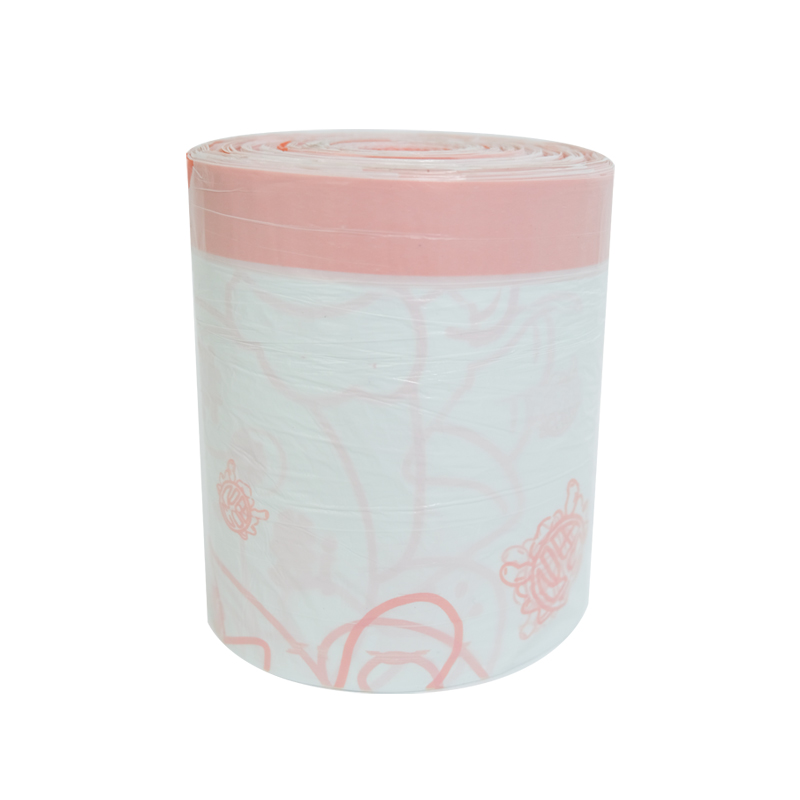
You cannot separate seal design from polymer behavior. The heat-welded seams react differently depending on the plastic chemistry. Bridging this knowledge gap helps buyers avoid incompatible material-seal combinations.
High-density polymers feature tightly packed molecules. They offer high tensile strength and an excellent moisture barrier. Manufacturers typically produce these at a lower gauge, making them thinner and lighter. When evaluating HDPE waste bags, you will notice they handle static weight beautifully. Star seals in HDPE prove highly effective for heavy, non-sharp waste. They easily manage dense paper or standard bathroom refuse. However, they lack elasticity. Once an HDPE seal suffers a puncture, it becomes highly prone to "zippering." The tear will travel rapidly up the side during transit.
LLDPE features branched molecular chains. These characteristics provide high puncture and tear resistance. The plastic possesses much greater elasticity. It can stretch significantly before failing. When combined with a star or flat seal, LLDPE adapts dynamically. The material stretches to accommodate jagged edges. It effortlessly handles broken glass or rigid kitchen debris. Crucially, it does this without compromising the heat-welded seam. It keeps air and water securely sealed inside during transport.
Facility managers require a concrete evaluation matrix. Choosing the right product demands matching the specific resin and seal to the operational environment. Follow these standardized scenarios to guide your procurement strategy.
Scenario A: Commercial Kitchens / Food Service
Requirement: These areas generate high moisture and heavy weight. Odor containment remains critical.
Selection: You must prioritize LLDPE resin combined with a Star Seal. This application demands leak-proof central seams. You must prioritize structural integrity over maximum volume. The elastic LLDPE will stretch around food containers without tearing.
Scenario B: Office Buildings / Retail (Dry Waste)
Requirement: These environments demand high volume capacity. They process mostly paper and plastic waste. Janitorial teams perform rapid change-outs.
Selection: Standard garbage bags made from HDPE paired with a Flat or Gusset Seal work best. This combination proves highly cost-effective. It delivers maximum holding capacity. Since liquid leaks pose a low risk here, corner blowouts rarely occur under light paper loads.
Scenario C: Industrial / Manufacturing
Requirement: Industrial facilities produce heavy, irregular, or sharp debris. Waste loads shift unpredictably during transit.
Selection: Deploy heavy-gauge LLDPE alongside a Flat Seal or Gusset Seal. A star seal central point might experience excessive stress from large, rigid items. A thick LLDPE flat seal accommodates bulky objects safely while resisting punctures from sharp metal or wood shards.
Understanding the science helps, but practical rollout introduces new risks. You must audit new products before committing to a full-scale facility rollout. Many buyers encounter unexpected pitfalls during implementation.
Buying the wrong dimensions ruins even the best seal. We often see buyers select bags based solely on volume. They ignore width versus length ratios. This forces the janitorial staff to stretch the plastic prematurely over the bin rim. This tension stresses the bottom seal before anyone even adds waste. When a worker pulls the bag out, the pre-stressed bottom seam easily snaps under the sudden load.
Manufacturer spec sheets provide a good baseline. However, they do not guarantee real-world performance. You should advise your procurement team to conduct physical tests during the sampling phase. Fill the bag with wet paper towels to simulate weight and moisture. Perform a water test to check for microscopic seam gaps. Then, conduct a drop test. Lift the loaded bag eighteen inches and drop it on concrete. This verifies the manufacturer claims regarding heat-seal consistency.
Before purchasing new plastic bin liners, you must discuss resin sourcing with your vendors. Verify whether they use prime resins or post-consumer recycled (PCR) blends. PCR offers excellent sustainability benefits. It helps facilities meet environmental goals. However, recycled polymers possess shorter molecular chains. They require significantly thicker gauges to achieve the same seal strength as virgin resin. Adjust your thickness requirements upward if you choose PCR materials.
Cleaner waste transport represents an engineered outcome. It never happens by accident. It relies entirely on the precise pairing of seal type, material, and facility application. Relying solely on plastic thickness leads to continuous operational failures. You must prioritize how the bottom seam distributes weight.
We encourage procurement teams to audit their current waste streams immediately. Identify specific facility zones with frequent transport leaks or spills. Do not replace all bags at once. Instead, request targeted seal and resin combinations for pilot testing. Deploy Star-sealed LLDPE bags in your wet-waste zones first. Monitor the reduction in secondary cleaning tasks. By making informed, science-based selections, you will transform waste transport from a messy liability into a seamless operational workflow.
A: While highly leak-resistant due to centralized weight distribution and no bottom corners, no bag is 100% leak-proof if punctured. Puncture resistance depends heavily on the resin. LLDPE is strongly preferred for sharp, wet waste environments.
A: Flat seals create severe structural stress points at the two bottom corners. When heavy waste shifts during a vertical lift, all the kinetic energy hits those points. This localized pressure easily exceeds the plastic's tensile strength, leading to blowouts.
A: No. A poorly calibrated heat-seal on thick plastic will fail faster than a high-quality seal on a thinner gauge. Seal consistency and geometric design often outrank sheer mil thickness when determining actual transport durability.


