


Views: Author: Site Editor Publish Time: 2026-09-29 Origin: Site


Retail packaging buyers frequently face a frustrating dilemma. You must balance beautiful, eye-catching aesthetics against robust functional durability. Achieving this balance without overspending your packaging budget proves notoriously difficult. Standard unreinforced plastic bags often suffer from a severe structural vulnerability. Stress concentrates heavily right at the handle cut-out, particularly at the sharp internal corners. When shoppers carry heavy items, these corners yield and tear.
Upgrading to a reinforced Die Cut Shopping Bag bridges the gap between cheap alternatives and expensive premium packaging. It transitions a standard cost-effective option into a highly reliable retail asset. You gain verifiable improvements in load-bearing capacity immediately. More importantly, your brand remains fully protected against embarrassing parking lot spills. In this comprehensive guide, we will explore precisely how different handle technologies operate. You will learn how to map load capacities effectively. We will also detail specific customization risks so you can avoid costly production mistakes.
Reinforced handles significantly increase the tear resistance and weight capacity of a standard die cut shopping bag.
Two primary reinforcement methods—fold-over tops and interior patch reinforcements—serve different aesthetic and structural needs.
Upgrading to reinforced LDPE shopping bags reduces the hidden costs of double-bagging and in-transit bag failures.
Procurement requires evaluating mil thickness, print safe zones, and local compliance standards for retail carrier bags.
Unreinforced handles possess an inherent mechanical flaw. When manufacturers punch an oval hole directly into a flat plastic film, they create a weak point. The cut removes material right where the bag needs strength the most. As a customer lifts the bag, the entire weight of the contents pulls downward. This force travels up the sides and concentrates instantly at the corners of the handle.
Under static conditions, a standard bag might survive. However, retail environments involve dynamic loads. A customer walks to their car, swinging the bag. This bouncing motion multiplies the effective weight pulling against the plastic. The film stretches at the corners, reaches its yield point, and ultimately tears. We see three common failure triggers in retail settings:
Dynamic bouncing during customer transit.
Sharp corners of internal product boxes pulling against the side walls.
Temperature extremes weakening the structural integrity of the film.
This handle failure damages your brand experience severely. If a die cut shopping bag rips in public, products spill onto the ground. Shoppers feel frustrated. They blame the retailer for cutting corners on quality. Cashiers anticipate this exact problem every shift. They often double-bag heavy items instinctively to prevent tearing at checkout. This workaround slows down lines and wastes your inventory.
We must define typical baseline metrics to understand the value of an upgrade. A standard unreinforced bag at 1.5 to 2.0 mil thickness usually holds about 3 to 5 pounds safely. Exceeding this limit dramatically increases the risk of a corner tear. If your average sale weighs more than 5 pounds, you are operating dangerously close to failure.
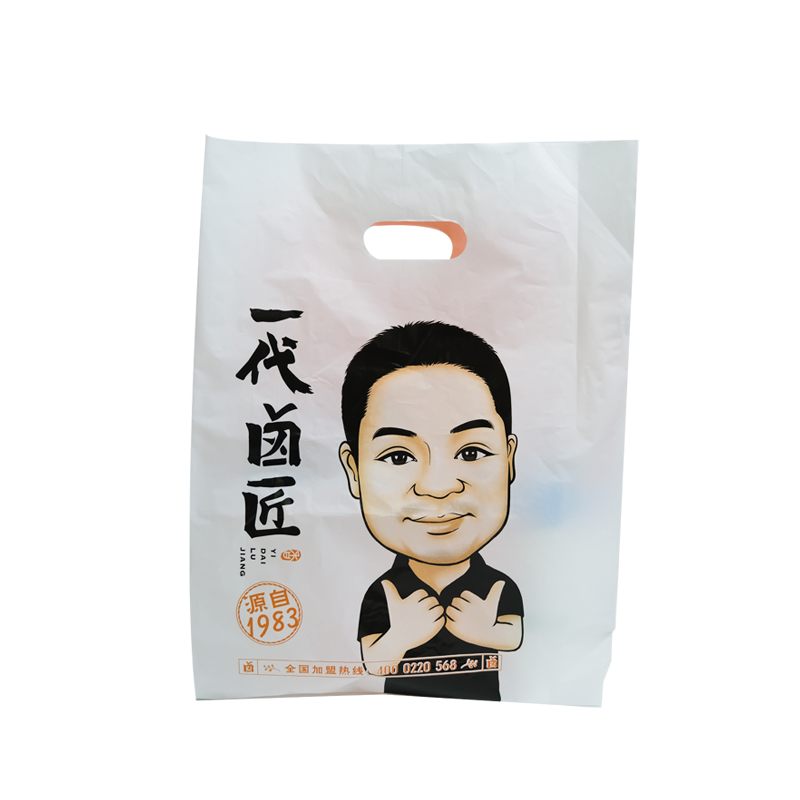
Packaging engineers developed two industry-standard methods to solve this tearing problem. Each engineering approach reinforces the die cut area differently. They serve distinct aesthetic and structural needs for different retail environments.
Patch Reinforcement involves adding extra material. During production, a specialized machine heat-seals a thick polyethylene patch directly to the interior of the bag. This clear or colored patch sits right behind the handle area. Once secured, the die-cutter punches the handle hole through both the bag film and the patch simultaneously. This method maintains a perfectly flat exterior profile. You can print complex logos right up to the handle. It provides extraordinary durability because the patch distributes stress across a wider internal surface area. However, the heat-sealing process adds a slight gauge variation near the opening. You might notice a faint weld line where the patch adheres.
Fold-Over Top (Turn-Top) Reinforcement uses the bag's own material for strength. The manufacturing equipment folds the top edge of the bag down into the interior by several inches. The machine then punches the handle through this folded section. It literally doubles the material thickness at the highest stress point. It also creates a highly finished, exceptionally clean top edge. Shoppers often associate this clean edge with luxury packaging. Conversely, the fold consumes existing material. It inevitably reduces the usable interior height of the bag. You must account for this lost space when sizing your dimensions.
Table: Patch vs. Fold-Over Reinforcement Comparison
Feature | Patch Reinforcement | Fold-Over (Turn-Top) |
|---|---|---|
Material Used | Separate poly patch (heat-sealed) | Bag's own material (folded) |
Exterior Profile | Flat, optimal for full continuous printing | Clean top edge, horizontal folded seam visible |
Impact on Bag Height | None (maintains full dimensions) | Reduces internal height by 1 to 3 inches |
Strength Distribution | Spread across the glued patch area | Doubled thickness across the entire top margin |
Upgrading your handles yields impressive performance metrics. Load capacity multipliers provide a clear picture of this improvement. When you add a poly patch or a fold-over top to a 2.0 mil bag, the safe carrying limit jumps significantly. A standard bag holding 5 pounds can suddenly support 12 to 15 pounds safely. The reinforcement absorbs the dynamic shock of walking and redistributes it.
Material synergies play a massive role in this durability. Reinforcements behave differently depending on the base film. They work exceptionally well with LDPE shopping bags. Low-density polyethylene naturally possesses excellent stretch resistance. It elongates slightly under pressure instead of snapping. The rigid handle reinforcement stops the cut-out from stretching uncontrollably. Meanwhile, the flexible LDPE body absorbs the bumps and shifts of heavy products. This synergy creates an incredibly resilient package.
Cost analysis remains a primary concern for procurement teams. Reinforced bags do carry a slightly higher initial unit cost. However, you must evaluate this against your operational waste. Consider the hidden expenses of unreinforced bags at the checkout counter:
Cashiers spend extra time double-bagging heavy purchases.
You consume two separate bags for a single transaction.
Dropped merchandise leads to expensive inventory write-offs.
Negative customer reviews reduce repeat store visits.
Framing the minor unit cost increase against the complete elimination of double-bagging usually proves beneficial. Investing in better handles saves money over time by reducing transaction costs and protecting your merchandise.
Knowing when to specify a reinforced handle prevents over-engineering. Buyers need a clear shortlisting logic to make cost-effective packaging decisions. You can map your needs directly to your product weight and brand positioning.
Keep standard unreinforced handles for specific lightweight scenarios. If your products weigh very little, standard die cuts perform perfectly well. They remain the best choice for businesses selling lightweight apparel, greeting cards, small cosmetics, and basic pharmacy items. A simple t-shirt or a bottle of vitamins will never stress the corners enough to cause a tear. You save money by skipping unnecessary structural upgrades.
Upgrade to reinforced handles when selling heavy or structurally rigid items. Sturdy retail carrier bags become essential for products like hardcover books, hardware supplies, shoe boxes, or multiple heavy garments. Liquids also demand strong handles due to their dense, shifting weight. A torn handle dropping glass bottles creates a massive liability for your store.
Furthermore, high-end retail relies heavily on physical perception. Structural integrity directly signals brand quality. A flimsy handle cheapens the perceived value of luxury cosmetics or boutique clothing. A reinforced top feels substantial in the customer's hand. It reassures them you care about their entire shopping experience from checkout to their front door.
Designing a custom bag requires careful attention to manufacturing realities. Print distortion risks catch many first-time buyers off guard. You must establish a strict print safe zone on your artwork files. Heat-sealing an interior patch creates a faint physical line on the bag's exterior. Folding the top creates a thick physical crease. If you place your custom logo or text directly over these transitions, the flexographic printing plates will skip or distort the ink. Always guide your design team to place critical artwork below the reinforcement zone.
Buyers also misunderstand the relationship between film thickness and handle strength. Clarify this rule internally: a reinforced handle never compensates for a bag body that is fundamentally too thin. If you sell sharp, square shoe boxes, upgrading the handle will not stop the box corners from puncturing the bottom of the bag. You must specify the correct overall mil thickness first, then add the reinforcement.
Finally, factor in local compliance considerations. Handle reinforcements influence reusable bag legislation significantly. Many municipalities enforce strict minimum thickness requirements for retail packaging to qualify as multi-use. A thick fold-over top or a heavy-duty patch can help a bag pass regional compliance standards. You must always review local retail carrier laws before approving a massive production run.
Reinforced handles effectively transition standard die cut bags from light-duty packaging into reliable, heavy-duty retail solutions. They protect your brand reputation by ensuring customers get their purchases home safely. They also eliminate the wasteful practice of double-bagging at the checkout counter, keeping your line moving efficiently.
Before committing to high-volume minimum order quantities, always request physical samples from your manufacturing partner. Load these samples with your heaviest retail products. Test their dynamic load capacity by carrying them around your facility. Verifying the performance physically guarantees you select the exact specifications your business needs.
A: Manufacturers typically use polyethylene patches for plastic bags to match the base material. Paper bags might use glued cardboard strips for strength. Fold-over methods simply utilize the existing bag material, folding it inward to double the thickness around the handle area.
A: Yes, they remain highly recyclable. When manufacturers bond LDPE patches to LDPE bags, they create a mono-material product. This consistent material profile keeps the recycling process transparent and directly supports your corporate sustainability goals.
A: Patch reinforcements maintain your bag's exact dimensions. However, fold-over tops consume existing material to create the reinforced edge. This manufacturing fold typically reduces the usable internal height of your bag by 1 to 2 inches.
A: High-density (HDPE) bags resist punctures well but can snap suddenly under sharp stress. LDPE bags provide superior stretch resistance. A reinforced LDPE bag yields slightly under heavy weight, making it the better choice for bulky, heavy retail items.


