
English 
Landline: +86-536-6066059
Email: qingyuanpackaging@gmail.com
Dawazi Village, High-tech Industrial Zone, Zhucheng City, 262200, Shandong Province, China


Views: Author: Site Editor Publish Time: 2026-04-16 Origin: Site


In modern flexible packaging, brands are paying more attention not only to barrier performance and convenience, but also to visual distinction. That is why the custom-shaped packaging bag has become increasingly popular in food, cosmetics, household products, pet supplies, and promotional packaging. A unique outline can help a product stand out immediately on the shelf, reinforce brand recognition, and create a more memorable user experience. But once businesses move beyond standard square or rectangular pouches, one practical question quickly comes up: Can a custom-shaped packaging bag be sealed? The short answer is yes, but the real answer depends on structure, material, sealing area, product type, and manufacturing precision. Shape adds visual value, but it also changes the way heat, pressure, and sealing alignment are applied. For that reason, understanding how sealing works in irregular packaging is essential before choosing a custom bag design for mass production.
A packaging bag is no longer only a protective container. In many industries, it is also part of the product story. Custom-shaped bags help companies move beyond standard formats and build a more distinctive shelf image.
They are often used to:
· create stronger brand recognition
· match the outline of a product or mascot
· make seasonal or promotional packaging more attractive
· improve first visual impact at retail
· support product differentiation in crowded categories
For example, snack packaging may be cut into a playful silhouette, beauty products may use elegant curves, and children’s product packaging may adopt cartoon-inspired contours. These shapes can attract attention effectively, but they must still meet the same functional requirements as conventional packaging, especially in sealing performance.
A custom-shaped packaging bag can be sealed, but successful sealing depends on good design and proper production control. The bag shape itself does not automatically prevent sealing. What matters is whether the sealing area is designed in a way that allows consistent heat sealing, pressure distribution, and material bonding.
In practice, many custom-shaped pouches are sealed successfully every day. However, some designs are easier to seal than others. A simple curved edge usually performs better than an extremely narrow corner, deep inward cut, or highly complex outline.
So the real issue is not whether sealing is possible. The more useful question is this: how should a custom-shaped bag be designed so that it remains attractive and still seals reliably?
Standard pouches usually have straight, predictable sealing lines. This makes heat and pressure easier to apply evenly. In contrast, irregularly shaped bags may introduce design features that complicate the sealing process.
Common sealing challenges include:
· curved or angled sealing edges
· narrow corner areas
· uneven sealing width
· decorative contours near the seal zone
· difficulty keeping product away from the sealing line
· inconsistent pressure distribution on complex outlines
For example, if the design includes sharp curves or a very narrow top section, the sealing jaws may not apply heat and pressure uniformly across the full edge. This can lead to weak points, wrinkles, or incomplete bonding.
That is why custom packaging design should always consider the seal path, not only the visual outline.
A shaped bag may look creative from the outside, but its sealing area must remain practical. One of the most important principles in custom pouch sealing solutions is maintaining a stable and usable seal margin.
A seal area should ideally provide:
· enough width for reliable bonding
· smooth edges for even pressure application
· a clean area free from product contamination
· compatibility with the selected film structure
· room for filling and final closure
If the decorative shape reduces the seal area too much, the pouch may look impressive but become difficult to produce consistently. That is why experienced packaging manufacturers often balance design freedom with structural discipline.
The more unusual the shape becomes, the more carefully the sealing zone must be protected.
This is especially true for products that require strong barrier performance, leak resistance, or vacuum sealing.
The answer to “Can a Custom-shaped Packaging Bag be sealed?” also depends heavily on material selection. A pouch may have a good shape design, but poor material pairing can still result in unreliable sealing.
Different materials respond differently to heat, pressure, and forming behavior. The sealing layer is particularly important because it determines how well the inner surfaces bond during closure.
Common material structures used in shaped bags:
· PET/PE
· BOPP/CPP
· NY/PE
· PET/AL/PE
· Paper/PE laminated structures
Each structure offers different advantages. Some prioritize barrier protection, while others focus on flexibility, transparency, puncture resistance, or print performance. The correct combination depends on the product inside and the intended packaging process.
Below is a simple table to help explain how design and material factors influence sealing.
Factor | Effect on Sealing | Practical Consideration |
Bag shape complexity | Higher complexity may reduce seal consistency | Avoid overly narrow corners and deep contours |
Seal width | Wider, even seals improve strength | Keep a stable sealing margin |
Film structure | Different laminates respond differently to heat | Match material to product and machine |
Product type | Powders, liquids, and oils affect seal cleanliness | Prevent contamination in seal area |
Filling method | Manual and automatic filling create different demands | Design for production reality |
Sealing temperature | Too low or too high causes weak or damaged seals | Optimize during testing |
This shows that irregular shaped bag sealing is not controlled by one factor alone. It is the result of design, material, and process working together.
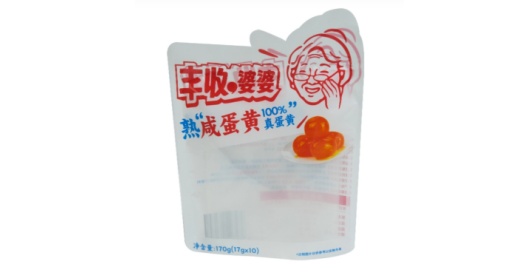
Not every custom shape creates the same difficulty level. Some formats are relatively easy to produce, while others require more advanced tooling and testing.
Rounded-edge pouches are among the easier custom shapes to seal. The curves are gentle, and the seal line can remain relatively stable.
These are visually strong and popular for promotional products. They can be sealed successfully, but the design should avoid extreme details in the sealing area.
These are often used for beverages, sauces, or cosmetic refills. They can be practical if the top or side sealing path remains functionally clear.
A custom outline combined with a transparent window can be sealed well if the material layers and print layout are engineered carefully.
Some businesses assume that a more complicated shape automatically means better shelf appeal. In reality, a cleaner and better-balanced custom shape often performs better in both production and market presentation.
A shaped pouch for dry biscuits does not face the same sealing demands as a pouch for sauce, powder, or frozen food. That is why sealing design must always be matched to the packed product.
Dry products are generally easier to handle, but crumbs or powder dust can still interfere with the seal if filling is not controlled.
These require stronger sealing reliability because even minor weakness can lead to leakage during transport.
The seal must perform well not only during normal storage but also under pressure changes or long shelf-life requirements.
These often focus on visual impact, but the seal still needs to protect the contents and survive handling.
In other words, asking whether a custom-shaped bag can be sealed is only the first step. The next step is deciding what kind of sealing performance the application actually requires.
So, can a Custom-shaped Packaging Bag be sealed? Yes, it can, and in many cases it can be sealed very effectively. The important point is that sealing success depends on more than the bag’s outer appearance. It requires the right balance of shape design, seal margin, film structure, filling method, and production precision. A well-designed custom bag can combine strong shelf appeal with dependable package performance, while a poorly planned design may create avoidable sealing risks. In our work with flexible packaging projects, we have seen that the best results come from treating shape and function as one combined task rather than two separate ideas. At Zhucheng Qingyuan Packaging Co., Ltd., we believe custom packaging should not only look distinctive, but also perform reliably in actual use. If you want to explore shaped pouch options, compare sealing possibilities, or discuss which structure is more suitable for your product, you are welcome to learn more from our team in a practical and professional way.
They can be more challenging, especially if the design includes narrow corners, sharp curves, or uneven seal areas. However, with proper structural planning and material selection, they can still be sealed reliably.
They are commonly used for snacks, cosmetics, household items, promotional samples, pet products, and some liquid or powder applications, depending on the material and sealing requirements.
Not necessarily. A bag that is too complex may create production and sealing difficulties. Often, a cleaner custom shape offers a better balance between visual impact and practical performance.
Key checks include seal strength, material compatibility, filling performance, edge alignment, leakage resistance, and whether the design runs smoothly on the intended packaging equipment.


