
English 
Landline: +86-536-6066059
Email: qingyuanpackaging@gmail.com
Dawazi Village, High-tech Industrial Zone, Zhucheng City, 262200, Shandong Province, China


Views: Author: Site Editor Publish Time: 2026-08-31 Origin: Site


Hotel waste management is rarely viewed as a strategic priority. Procurement teams often dismiss it as a basic commodity purchase. Yet, this operational lever drastically impacts housekeeping efficiency. It also influences overall guest satisfaction and hidden overhead expenses. Hospitality teams face unique complexities every day. You manage a vast spectrum of waste streams across a single property. These range from lightweight room debris to heavy, wet food waste in commercial kitchens.
Procurement and operations managers must evaluate specific performance criteria before rolling out new supplies. You need the correct bags for property-wide deployment. In this guide, we explore how to source the right garbage bags for your entire facility. You will learn actionable strategies to reduce material spend, enforce regulatory compliance, and streamline daily cleaning routines.
Choosing the correct resin (e.g., HDPE vs. LLDPE) based on hotel zones drastically reduces material spend and prevents tearing.
Guest room plastic bin liners prioritize cost-efficiency and exact sizing, while F&B areas require puncture-resistant, high-mil thickness.
Local sustainability regulations (such as minimum PCR requirements) dictate which materials are compliant for corporate hotel chains.
Supplier selection should hinge on bulk economics, dimensional consistency, and transparent material specifications.
Substandard trash liners drain hotel budgets in invisible ways. When procurement teams buy based solely on the lowest price per case, they often ignore the daily realities of hospitality operations. A failing bag creates immediate cascading effects.
Labor is your highest operational expense. When a bag tears, liquids and sticky residue leak into the container. Housekeepers must then stop their routine to sanitize the bin. This unexpected cleaning step adds three to five minutes per room. Across a 300-room property, these minutes compound into hours of lost productivity. To prevent these leaks, housekeeping staff often resort to double-bagging. This unauthorized workaround immediately doubles your material consumption.
Guests notice small details. Ill-fitting plastic bin liners that slump into the trash can look unprofessional. Bags with excessive overhang look messy and unkempt. Furthermore, poor odor control in public lobby areas directly impacts the hotel atmosphere. A leaking trash bag in a luxury corridor can easily trigger negative reviews. You must maintain aesthetic standards alongside functional performance.
Purchasing the wrong material thickness for a specific zone guarantees wasted funds. If you supply heavy-duty bags for office paper waste, you overpay for unnecessary durability. Conversely, if you supply thin bags for heavy kitchen waste, staff will constantly break them. You then consume twice as many weak bags to do the job of one strong bag. Precise allocation stops this financial leak.
Understanding polymer types is essential for commercial purchasing. The hospitality industry relies heavily on two specific plastic resins. Each resin serves a distinct purpose within hotel operations.
HDPE plastics are thinner and crinkly to the touch. Manufacturers measure their thickness in microns. These bags provide excellent temperature resistance and moisture protection.
Hotel Application: You should deploy HDPE waste bags in guest rooms and back-office areas. The waste in these zones is typically soft and lightweight. Items like paper, tissues, and empty plastic bottles lack sharp edges. HDPE handles this load effortlessly.
Cost Benefit: HDPE bags hold heavy, non-sharp loads well. They require less petroleum to manufacture. This lower raw material requirement translates to a highly cost-effective price point per case.
LLDPE plastics feel softer and much thicker. Manufacturers measure them in mils (thousandths of an inch). This material stretches significantly before it punctures or tears.
Hotel Application: LLDPE is mandatory for heavy-duty zones. Kitchens, bars, landscaping, and main lobby areas handle aggressive debris. Broken glass bottles, heavy food scraps, and jagged cardboard easily slice through rigid plastics. LLDPE stretches around these sharp edges, preventing catastrophic bag failure during transit.
Table 1: Quick Reference Guide for Resin Selection
Feature | HDPE (High-Density) | LLDPE (Linear Low-Density) |
|---|---|---|
Measurement Unit | Microns (μm) | Mils (mil) |
Texture | Crinkly, stiff | Soft, stretchy |
Best Resistance | Heavy weights (no sharp edges) | Punctures and tearing |
Ideal Hotel Zones | Guest rooms, restrooms, offices | Kitchens, bars, outdoor landscaping |
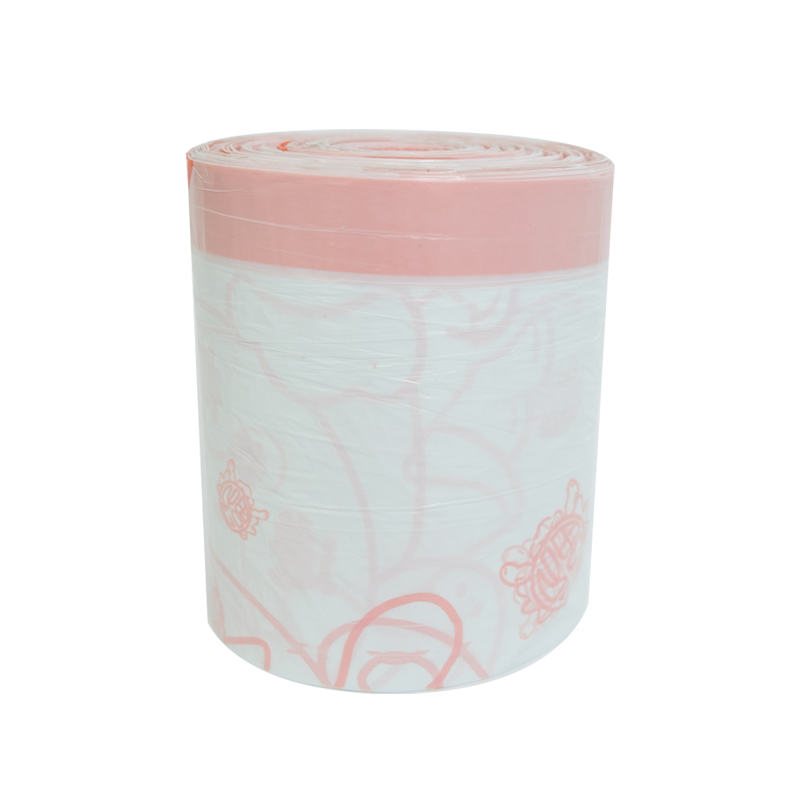
A one-size-fits-all approach fails in hospitality. Each department generates unique waste profiles. You must customize your inventory based on specific container sizes and daily refuse weights.
Guest room bins are small and primarily collect cosmetic or paper waste.
Specs: These bins require small capacity bags, usually between 3 and 7 gallons. A thickness of 6 to 10 microns (HDPE) provides ample strength.
Implementation: The bag must fit the container snugly. Eliminate excess overhang to maintain pristine room aesthetics. Always specify star-sealed bottoms for guest rooms. This seal gathers the plastic at a single central point. It eliminates weak corners and effectively traps discarded liquids from beverage cups.
Commercial kitchens generate the heaviest and most hazardous waste on the property. Food waste is exceptionally wet and dense.
Specs: F&B areas use large capacity containers holding 33 to 55+ gallons. You need LLDPE material measuring between 1.2 and 2.0+ mils.
Implementation: Kitchen bags require maximum stretch. Banquet staff frequently toss heavy food trays, broken glass, and liquid waste into these bins. The bag must survive being dragged across tiled floors. It must endure rough handling during transit to the outdoor dumpster without catastrophic failure.
Back-of-house operations prioritize efficiency and clear sorting protocols.
Specs: Purchase standardized sizes designed specifically to match commercial Brute or Slim Jim containers. An improper fit leads to bags caving in under weight.
Implementation: Utilize color-coded options. Black bags obscure high-value waste and maintain visual cleanliness. Clear bags are essential for recycling sorting protocols. They allow supervisors to quickly spot misplaced items and prevent contamination in recycling dumpsters.
Environmental regulations increasingly govern hospitality operations. Corporate hotel chains face strict mandates regarding plastic consumption. You must align procurement strategies with both legal requirements and broader corporate ESG (Environmental, Social, and Governance) goals.
State-level legislation forces properties to rethink plastic usage. For instance, California regulations mandate a specific percentage of PCR content in commercial trash bags. By purchasing bags made with 10% to 20% post-consumer recycled plastic, you stay compliant with strict local laws. These materials divert existing plastics away from landfills. Procurement teams must request official PCR certification from suppliers to prove compliance during corporate audits.
Many suppliers heavily market "biodegradable" or "compostable" labels. You must evaluate these claims through an evidence-oriented lens. Bags made from PLA (Polylactic Acid) or PBAT require specific conditions to break down.
Most plant-based plastics demand high-heat commercial composting facilities. They do not naturally degrade in standard landfills. If your property hauling contract sends waste to a conventional landfill, expensive compostable bags provide no environmental benefit. They simply consume a larger portion of your budget.
You can integrate sustainable liners into corporate ESG goals without sacrificing leak protection. Transitioning to thinner, high-performance HDPE bags reduces overall plastic tonnage. Additionally, sourcing bags manufactured in facilities powered by renewable energy improves your supply chain sustainability. Always prioritize functional performance. A green bag that breaks requires a replacement bag, ultimately doubling your environmental footprint.
Sourcing reliable consumables requires rigorous vetting. Do not select a supplier based merely on a catalog picture. You must evaluate their manufacturing consistency and supply chain resilience.
Variations in bag sizing severely disrupt housekeeping workflows. If one batch of bags measures two inches shorter than the last, they will fall into the bins. Housekeepers then waste time retrieving dirty liners. You must demand standardized measurements. Professional suppliers use automated extrusion machines to guarantee exact dimensions across millions of units.
The bottom seal determines the structural integrity of the bag. Understanding these variations helps you match the product to the task.
Chart: Seal Type Evaluation Summary
Seal Type | Manufacturing Method | Performance Assessment |
|---|---|---|
Flat Seal | Sealed straight across the bottom edge. | Strong bottom, but prone to leaks at the two sharp corners. Does not conform well to round bins. |
Gusset Seal | Sides tucked in to form a flat bottom. | Fits square bins well. However, debris and liquids often get trapped in the folded creases. |
Star Seal | Folded multiple times and sealed at one central spot. | Exceptional leak prevention. Distributes weight evenly. Highly recommended for wet hospitality waste. |
Large properties and hotel chains consume thousands of liners weekly. Assess the supplier's ability to maintain stock for multi-property rollouts. They must offer wholesale pricing without quality fade. Quality fade occurs when a supplier secretly reduces micron thickness over time to increase their margins. Lock in strict technical specifications within your vendor contracts.
Before executing a bulk order, follow a systematic validation process.
Request Sample Packs: Obtain cases of various sizes and thicknesses.
Conduct a Housekeeping Stress Test: Ask staff to use the samples in real-world scenarios. Fill them with wet coffee grounds, heavy paper, and room debris.
Review Regulatory Specs: Check the supplier's PCR documentation.
When you evaluate new Garbage Bags, never skip the physical trial phase.
Optimizing garbage bags for a hotel requires careful consideration. You must match the specific polymer and thickness to the distinct waste profiles of different property zones. A thin HDPE liner perfectly suits the light debris of a guest room. Conversely, heavy-duty LLDPE bags keep commercial kitchens clean and safe from dangerous punctures.
The cheapest per-bag price is often the most expensive operational choice. If a cheap bag leads to housekeeping inefficiency, double-bagging, or regulatory non-compliance, you lose money. Quality materials protect your daily operational budgets.
We encourage procurement teams to act immediately. Audit your current waste streams to identify areas of over-consumption. Contact a packaging specialist to discuss custom sizing, request PCR-compliant options, and secure bulk trial samples for your housekeeping staff.
A: For standard paper and lightweight room waste, 6 to 10 microns (HDPE) is optimal. This thickness provides sufficient strength to hold tissues, empty bottles, and wrappers without tearing. It also keeps your per-room material costs exceptionally low.
A: Some luxury properties remove liners to improve room aesthetics or meet aggressive zero-plastic eco-goals. However, this operational choice drastically increases labor. Housekeeping must spend extra time washing and sanitizing the bare bins daily to maintain hygiene standards.
A: No. Kitchen waste often contains sharp objects like bones or broken glass. If punctured, HDPE is prone to "zippering"—tearing completely down the side. LLDPE is much safer for kitchens due to its high puncture resistance and stretchability.
A: Plant-based plastics have performance limits and tear more easily than traditional petroleum-based bags. Furthermore, they require proper disposal infrastructure. If your hotel lacks a contract with a commercial composting facility, these bags will not degrade effectively in a standard landfill.


