
English 
Landline: +86-536-6066059
Email: qingyuanpackaging@gmail.com
Dawazi Village, High-tech Industrial Zone, Zhucheng City, 262200, Shandong Province, China


Views: Author: Site Editor Publish Time: 2026-04-10 Origin: Site


If you are sourcing flexible packaging for food, snacks, powder products, pet treats, daily chemicals, or light industrial goods, one of the first questions you will ask is simple: what’s the price of a Back-side Seal Bag? It sounds like a straightforward pricing issue, but in practice, the answer depends on a combination of technical and commercial factors. Material structure, bag size, thickness, printing requirements, order volume, and special packaging features can all change the final unit cost. That is why buyers often receive different quotations from different suppliers, even when the packaging style looks similar at first glance. For purchasing teams, brand owners, and distributors, understanding the price logic behind a back-side seal bag can make procurement far more efficient. Instead of comparing numbers alone, it is better to know what those numbers include, what drives them up, and where there may be room to optimize without reducing packaging performance.
A back-side seal bag is a flexible packaging bag sealed along the back center or back side of the pouch body. This structure creates a clean front panel, which is one reason it is widely used for retail packaging. It is common in industries that need attractive shelf presentation together with reliable sealing performance.
Compared with some other pouch types, a back-side seal bag is often appreciated for its balanced combination of appearance, production efficiency, and practical storage performance. It can be made in different sizes and laminated material combinations depending on the product packed inside.
Typical applications include:
· coffee and tea
· powders and granules
· candies and snacks
· frozen or dry food
· household and personal care items
Because the format is versatile, the price range can also be quite broad.
There is no single universal price for a back-side seal bag. In most cases, suppliers calculate cost based on the exact specification rather than the bag type alone. A small transparent bag for simple packaging may cost far less than a custom printed, multilayer, high-barrier back-side seal bag designed for premium food products.
In real procurement, buyers are usually pricing a combination of factors:
· material type
· bag dimensions
· film thickness
· number of print colors
· order quantity
· surface finish and special functions
That means two back-side seal bags may look similar in shape while having very different production costs.
The table below offers a simple reference to help buyers understand how pricing often changes by project complexity. These are not fixed quotations, but a useful way to understand the structure behind the cost.
Order Type | Common Specification | Price Tendency | Why the Cost Changes |
Plain standard bag | Simple material, no printing, standard size | Lower | Minimal processing and no plate cost |
Printed standard bag | Basic custom printing, common dimensions | Medium | Printing and design setup increase cost |
High-barrier bag | Laminated layers for moisture or oxygen protection | Medium to high | Material structure is more complex |
Premium retail bag | High-quality printing, stronger thickness, custom finish | High | Better appearance and stronger protection |
Low-volume custom order | Fully customized but small quantity | Higher per unit | Setup cost is spread across fewer bags |
Large-volume repeat order | Stable specification, higher quantity | Lower per unit | Better scale efficiency in production |
This table helps explain why many buyers are told that the unit price cannot be confirmed until the specification sheet is complete.
When customers ask about back-side seal bag cost, material is usually the first major variable we look at. The film structure affects not only price, but also barrier performance, durability, appearance, and sealing behavior.
Different products require different levels of protection. For example, dry snacks may need a simpler structure than coffee, powdered seasoning, or moisture-sensitive products.
Common combinations may include:
· PET/PE
· BOPP/CPP
· PET/VMPET/PE
· PET/AL/PE
· NY/PE
A simple structure is usually more economical, while a high-barrier laminated structure is more expensive because it uses more layers and more demanding converting processes.
If your product needs protection against oxygen, light, or moisture, the packaging may require aluminum foil, metallized film, or another barrier layer. These materials add value because they help extend shelf life and improve product stability, but they also raise raw material and production cost.
For many brands, the right material is not just a cost decision. It is also a product protection decision.
One of the most common reasons for quotation differences is that two customers are not asking for the same bag size or film thickness. Even small changes in dimensions can lead to a noticeable change in material usage.
A larger back-side seal bag consumes more film, and thicker film also increases resin and lamination cost. This is especially important for products that are heavy, sharp-edged, or exposed to transport stress.
A compact sample bag and a large family-size retail bag cannot be expected to share the same unit cost. The larger the bag, the more material is consumed per piece.
A thicker film generally offers better puncture resistance, stiffness, or premium feel. However, if thickness is increased beyond what the product really needs, the packaging budget may rise unnecessarily.
This is why many professional buyers ask suppliers to recommend a suitable thickness range based on the actual packed product rather than choosing by appearance alone.
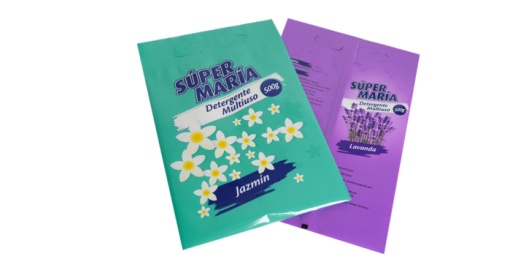
Custom printing is often essential for brand visibility, but it is also one of the main cost drivers in flexible packaging. A plain bag is relatively simple to produce. A printed back-side seal bag requires design preparation, cylinder or plate setup in some processes, color control, and stricter production management.
Here are some of the main cost influences in printing:
· number of colors
· print coverage area
· matte or glossy finish
· registration precision
· whether the design changes frequently
A simple one- or two-color design usually costs less than full-coverage, high-detail retail artwork. If a customer regularly changes SKUs, layouts, or seasonal versions, setup costs may also rise.
For this reason, many packaging projects benefit from early artwork planning. A well-organized design system can help control total packaging cost over time.
Another key answer to the question “What’s the price of a Back-side Seal Bag?” is order quantity. In flexible packaging, the total order volume affects unit cost very directly.
When order quantities are low, the fixed costs of setup, machine adjustment, printing preparation, and quality inspection are spread across fewer units. That makes the per-bag price higher. When volume increases, those same fixed costs are distributed across more pieces, which usually brings the unit cost down.
This is why:
· trial orders often have a higher unit price
· repeat mass orders usually get better cost efficiency
· stable long-term specifications are easier to optimize in production
For growing brands, this creates a practical decision: is the priority lower initial investment, or lower unit cost over time? The answer depends on sales stage, storage capacity, and cash flow planning.
In our experience, asking “What’s the price of a Back-side Seal Bag?” is really the starting point of a broader packaging decision. The right answer depends on what the bag needs to do: protect the product, support your brand image, fit your filling process, and remain cost-effective at your target order volume. A well-priced bag is not simply the cheapest one on paper, but the one that matches product requirements without unnecessary cost. At Zhucheng Qingyuan Packaging Co., Ltd., we usually suggest evaluating a back-side seal bag through both technical performance and purchasing efficiency, because good packaging needs to work in production, transport, storage, and retail presentation at the same time. If you are comparing packaging options or preparing a new project, you are welcome to learn more from our team. We are glad to discuss material choices, custom specifications, and practical cost factors in a way that helps you make a clearer and more confident decision.
Not necessarily. A thicker bag may improve strength, but it also raises material cost. The best choice depends on the product weight, shape, filling process, and transport conditions.
Small custom orders often have a higher unit cost because setup, printing preparation, and machine adjustment costs are shared across fewer bags.
It affects both. Printing improves product presentation and branding, but it also increases production complexity, color control requirements, and setup cost.
You should ideally provide bag size, material preference, thickness, print design needs, order quantity, and whether you need features such as a zipper, valve, or tear notch.


